

Though forgiveness can help repair a damaged relationship, it doesn’t obligate you to reconcile with the person who harmed you, or release them from legal accountability. Instead, forgiveness brings the forgiver peace of mind and frees him or her from corrosive anger.
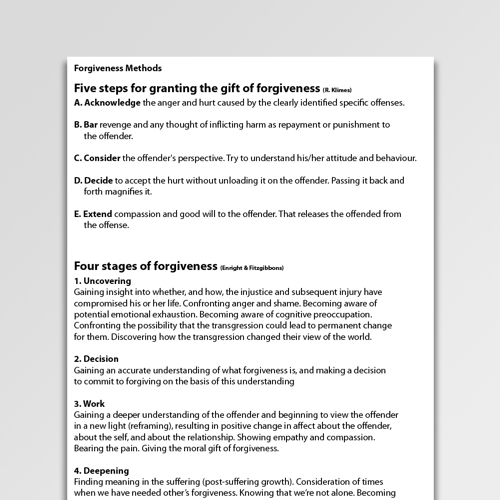
Here are the four stages of forgiveness :
- Uncovering – Gaining insight into whether, and how, the injustice and subsequent injury have compromised his or her life. Confronting anger and shame. Becoming aware of potential emotional exhaustion. Becoming aware of cognition preoccupation. Confronting the possibility that the transgression could lead to permanent change for them. Discovering how the transgression changed their view of the world.
- Decision – Gaining an accurate understanding of what forgiveness is, and making a decision to commit to forgiving on the basis of this understanding.
- Work – Gaining a deeper understanding of the offender and beginning to view the offender in a new light (reframing), resulting in positive change in affect about the offender, about the self, and about the relationship. Showing empathy and compassion. Bearing the pain. Giving the moral gift of forgiveness.
- Deepening – Finding meaning in the suffering (post-suffering growth). Consideration of times when we have needed other’s forgiveness. Knowing that we’re not alone. Becoming aware that forgiveness allows us to feel more connected with others and to experience decreased negative emotion.
Reference : https://www.psychologytools.com/wp-content/uploads/2018/05/forgiveness_methods_1.jpg
 Be Inspired..!!
Leave a reply to DiosRaw – Amber Cancel reply