
A funny little guide to adding fat to coffee (and maybe tea)
I really appreciate you checking out my blog! Just so you know, some of the links in this post are affiliate links. This means that if you buy something through them, I might earn a little bit of money, at no extra cost to you. There’s absolutely no pressure to buy anything, but if you do, it genuinely helps support the time and love I put into writing these posts.
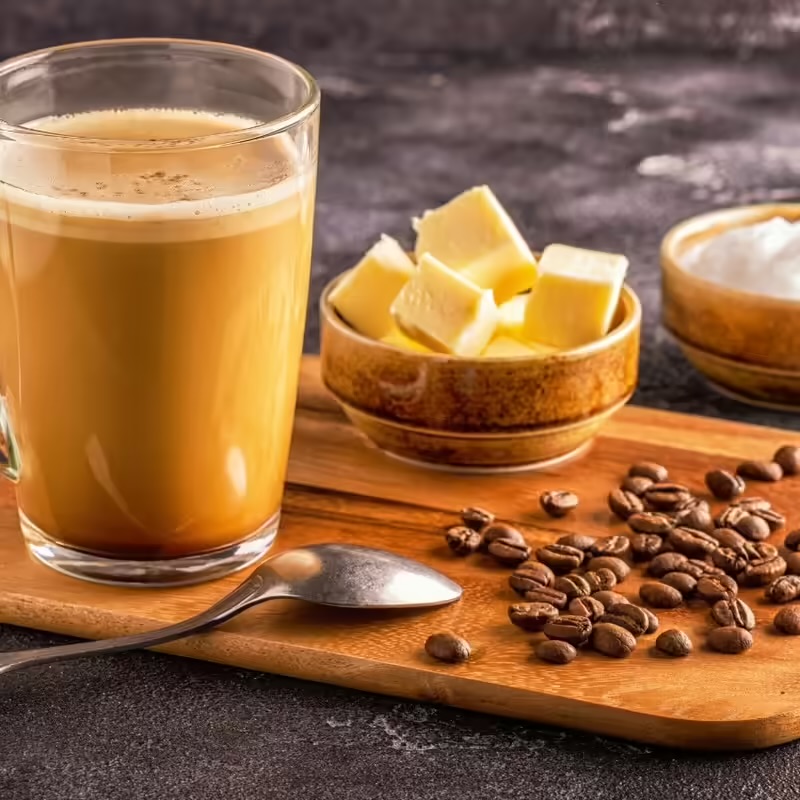
If you’ve ever scrolled through wellness TikTok or stumbled into the “biohacker” corner of YouTube, you’ve probably seen someone blend butter into their coffee with the confidence of a Michelin chef. At first, it looks wrong—like a prank your roommate would pull. But then you notice their frothy, latte-like cup and start to wonder: should I be adding fat to my coffee or tea too?
I’ve been down this rabbit hole, and here’s the scoop—without the science-y jargon.
Why people add fat to their morning brew
Think about breakfast. A big bowl of cereal or a sugary muffin will give you a fast energy rush… followed by the dreaded 10 a.m. crash. But fat works differently. It slows down digestion, keeps you full longer, and provides a steady stream of energy.
Adding fat to coffee or tea is basically a hack: it turns your drink into a mini meal. Instead of spiking your blood sugar, you feel fueled and focused. It’s especially popular with people who practice intermittent fasting or follow keto.
But does it actually taste good?
Let me be real: the first time I tossed butter into coffee, I thought I had ruined a perfectly good cup. But once I blended it (yes, you need to blend, not just stir), it tasted surprisingly creamy—like a fancy latte without the milk.
Tea is trickier. A strong black tea like English Breakfast or chai can handle the richness, but delicate green tea? It tastes… off. Trust me, I tried.
Popular fats people actually use
If you’re curious, here are the main players people swirl into their mugs, with real products you can grab on Amazon today:
1. Grass-fed butter
• Example: Kerrygold Pure Irish Butter
• This is the classic “bulletproof coffee” choice. Grass-fed butter has more omega-3s and vitamins than regular butter, and it blends into coffee like silk.
2. Ghee (clarified butter)
• Example: Ancient Organics Ghee
• Ghee is butter’s richer cousin. It’s lactose-free, has a nutty flavor, and doesn’t separate in hot drinks. I found it gives coffee a caramel-like vibe.
3. Coconut oil
• Example: Viva Naturals Organic Extra Virgin Coconut Oil
• This one adds a hint of tropical sweetness. If you love coconut macaroons, you’ll like this in coffee.
4. MCT oil
• Example: Sports Research Keto MCT Oil
• MCT stands for “medium-chain triglycerides,” a type of fat your body turns into quick energy. It’s tasteless but powerful—though I learned the hard way that too much too fast can upset your stomach. Start small!
5. Nut butters
• Example: Justin’s Classic Almond Butter
• This isn’t as common, but stirring in a spoonful of almond or peanut butter makes your coffee taste like dessert. It doesn’t blend as smoothly as oil, but it’s fun.
How to make it without making a mess
Here’s the secret: you can’t just drop butter into coffee and hope for the best. It’ll float around like a sad little iceberg. You need to emulsify—basically blend the fat with the hot liquid so it gets creamy.
Some people whip out a full blender, but I found that overkill for one cup. Instead, I use a handheld milk frother. It’s cheap, tiny, and blends everything into a frothy latte in seconds.
My first experiment (and what I learned)
When I first tried butter coffee, I went all in—two tablespoons of butter, because that’s what the internet said. Bad idea. I felt like I’d eaten an entire stick of butter for breakfast. The lesson? Start with just one teaspoon of fat and see how you feel.
Now, I usually go with one teaspoon of ghee and a splash of MCT oil. It gives me smooth energy without the jitters, and I don’t even think about food until lunchtime.
What about tea?
Here’s my honest take: butter tea is an acquired taste. Traditional Tibetan butter tea uses yak butter and salt—it’s warming and comforting, but if you grew up on sweet chai lattes, it might shock your taste buds.
That said, I tried adding coconut oil to chai, and it was actually delicious—kind of like a coconut spice latte. So, if you’re a tea person, start there.
Is it healthy or just hype?
Like everything in the wellness world, opinions are split. Some nutritionists say it’s a good way to keep energy steady. Others argue you’re better off eating a balanced breakfast with fiber and protein.
Personally, I see it as an option, not a magic bullet. If you enjoy the taste and it helps you focus, go for it. If not, no need to force it. Your body will let you know what works.
A few quick tips before you try
• Don’t chug MCT oil right away. Start with half a teaspoon to avoid stomach drama.
• Use a frother. Your coffee deserves better than floating oil slicks.
• Pair with strong coffee. Fat dulls weak coffee, but with bold dark roasts, it’s amazing.
• Experiment slowly. Everyone’s tolerance is different.
So… should you add fat to your coffee or tea?
Here’s the bottom line: if you’re curious, give it a try. Worst case, you waste one cup of coffee. Best case, you discover your new morning ritual.
The real win? It turns your daily caffeine fix into something that feels indulgent, like a little self-care moment before your day kicks off.
So, what do you think—are you team butter brew, or does the idea still sound like a prank? Would you actually try this tomorrow morning?
Drop your thoughts below—I’m genuinely curious to know if I’m the only one frothing up butter before my Zoom calls.
Disclosure: As an Amazon Associate, I may earn from qualifying purchases, but this does not affect my recommendations.I only suggest products I’ve personally vetted.
 Be Inspired..!!
Leave a comment