
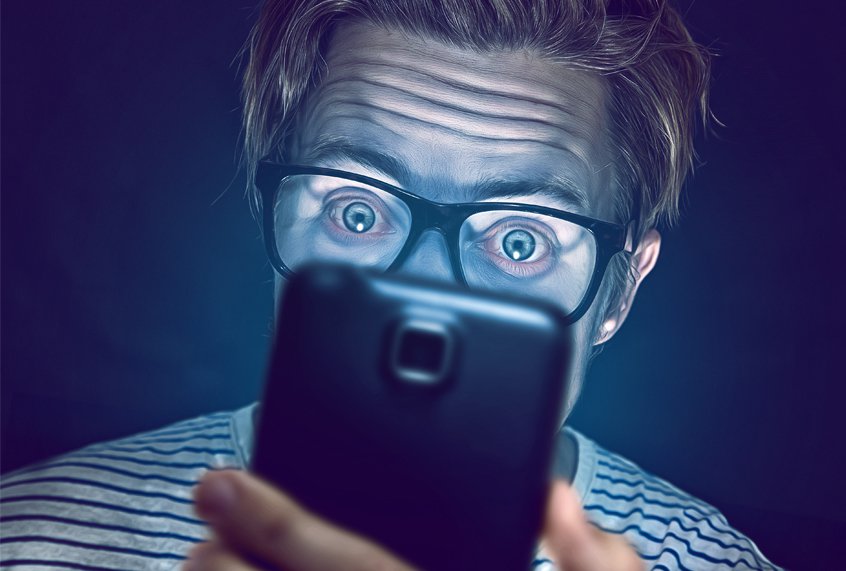
Blue wavelengths which are beneficial during daylight hours because they boost attention, reaction times, and mood—seem to be the most disruptive at night. At night, light throws the body’s biological clock the circadian rhythm out of whack. Sleep suffers. Worse, research shows that it may contribute to the causation of cancer, diabetes, heart disease, and obesity.
Here are a myriad of ways how blue light from your phones and computer screens can affect your health :
- Affects Memory – The disruption to your sleep schedule might leave you distracted and impair your memory the next day.
- Affects Learning – A poor night’s sleep caused by smartphone light can make it harder to learn.
- Build Neurotoxin – Over the long term, not getting enough sleep can lead to neurotoxin buildup that makes it even harder for you to get good sleep.
- Depression – People whose melatonin levels are suppressed and whose body clocks are thrown off by light exposure are more prone to depression.
- Increases Obesity Risk – By disrupting melatonin and sleep, smartphone light can also mess with the hormones that control hunger, potentially increases Obesity risk.
- Harms Retina – There’s some evidence that blue light could damage our vision by harming the retina over time, though more research is needed.
- Causes Cataracts – Researchers are investigating whether or not blue light could lead to cataracts.
- Causes Cancers – There’s a connection between light exposure at night and the disturbed sleep that come with it and an increased risk of breast and prostate cancer.
Even if there are so many health effects of blue light, we can’t stop using electronic equipments. So prevention is better than cure. Use dim red lights for night lights. Red light has the least power to shift circadian rhythm and suppress melatonin. Expose yourself to lots of bright light during the day, which will boost your ability to sleep at night, as well as your mood and alertness during daylight. Hope this helps.


Leave a Reply