
Why Alaskan kelp is suddenly everywhere and why you might actually care
I really appreciate you checking out my blog! Just so you know, some of the links in this post are affiliate links. This means that if you buy something through them, I might earn a little bit of money, at no extra cost to you. There’s absolutely no pressure to buy anything, but if you do, it genuinely helps support the time and love I put into writing these posts.
I’ll be honest: the first time I heard someone rave about kelp, I pictured slippery seaweed wraps from a sushi place I went to once and never fully trusted again. Kelp felt… niche. Crunchy-health-store niche. The kind of thing someone casually drops into a conversation right before telling you they wake up at 4:30 a.m. to meditate.
And then Alaskan kelp started showing up everywhere.
Not in an annoying, trend-chasing way—but quietly. On food labels. In skincare. In conversations about climate change that didn’t immediately make me want to change the subject. That’s when I realized kelp isn’t trying to be cool. It’s just wildly useful.
So let’s talk about Alaskan kelp—the surprising ingredient making waves in food, beauty, and sustainability—and why it’s worth paying attention to, even if you’ve never considered yourself a “sea vegetable” person.
What exactly is Alaskan kelp?
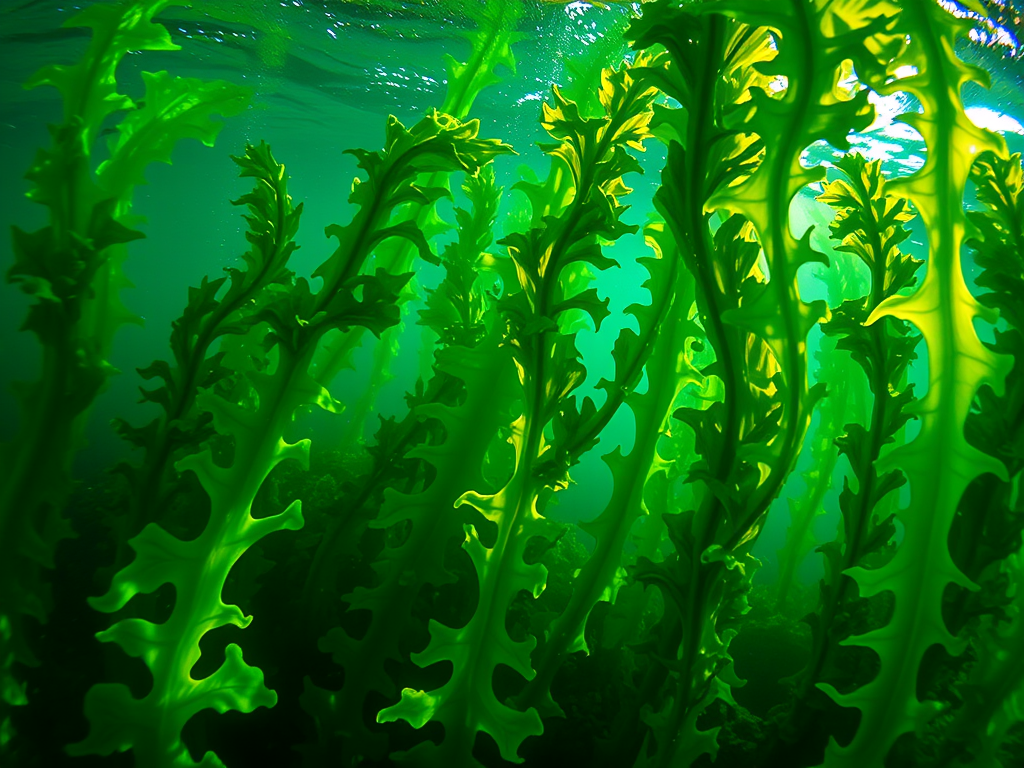
Kelp is a type of large seaweed that grows in cold, clean ocean water. Alaska happens to be one of the best places on Earth for it. The water is pristine, the temperatures are just right, and the kelp grows fast—really fast—without needing fertilizers, fresh water, or land.
That last part matters more than you might think.
Unlike most crops, kelp doesn’t take anything from the planet to grow. It just uses what’s already there—sunlight, seawater, and carbon dioxide—and quietly does its thing. Which already puts it in a different category than, say, almonds that need tons of water or crops that rely heavily on pesticides.
But kelp’s resume doesn’t stop at sustainability. Not even close.
Why people are eating it (and liking it)
Here’s where I expected kelp to lose me. I assumed it would taste aggressively “ocean-y,” like licking a rock at the beach.
It doesn’t.
Alaskan kelp has a mild, savory flavor—think umami, not fishy. It’s naturally rich in iodine, magnesium, calcium, and fiber, which makes it great for thyroid health, digestion, and overall nutrient support. And because it’s low-calorie but mineral-dense, it fits into a lot of eating styles without being preachy about it.
One of the easiest ways I’ve seen people use it is in seasoning blends. A product like Ocean’s Balance Kelp Powder can be sprinkled into soups, stews, or even popcorn for a subtle salty boost that doesn’t rely on excess sodium. It’s the kind of ingredient that makes food taste better without you having to explain it to anyone at the table.
Another crowd-pleaser is kelp-infused snacks or condiments. Barnacle Foods Organic Kelp Hot Sauce is a good example—it adds depth and flavor without turning your meal into a science experiment. You don’t eat it because it’s kelp. You eat it because it tastes good.
That’s an important distinction.
Why it’s showing up in beauty products
At some point, kelp crossed over from “health food store aisle” into “your bathroom cabinet,” and honestly, it makes sense.
Kelp is packed with antioxidants, vitamins, and minerals that help support skin hydration and barrier function. It’s especially popular in products aimed at soothing sensitive or stressed skin—which, let’s be real, describes most of us at this point.
A product like OSEA Undaria Algae Body Oil (yes, it’s on Amazon, and yes, people are obsessed with it) uses seaweed extracts to deeply moisturize without feeling greasy. This is the kind of skincare that doesn’t scream “anti-aging miracle” but quietly makes your skin feel healthier over time.
What I appreciate here is that kelp isn’t being used as a gimmick. It’s there because it works. Coastal communities have used seaweed for skin and health for generations. We’re just finally catching up—and putting it in nicer packaging.
The sustainability angle that doesn’t feel exhausting
Here’s where kelp really shines.
Kelp farming actually helps the environment. It absorbs carbon dioxide, reduces ocean acidification, and creates habitats for marine life. No deforestation. No soil degradation. No freshwater use. It’s one of the few food sources that genuinely improves the ecosystem it grows in.
And Alaskan kelp farming, in particular, tends to be small-scale and community-based. That means supporting kelp products often supports local coastal economies, not massive industrial operations.
In a world where “sustainable” sometimes feels like a marketing buzzword slapped onto everything from sneakers to shampoo, kelp is refreshingly straightforward. It doesn’t ask you to overhaul your life. It just quietly does better.
Why kelp feels different from other “superfoods”
We’ve all been burned before.
Remember when chia seeds were going to fix everything? Or when acai bowls were the answer to… something? Superfoods tend to arrive with a lot of noise and unrealistic promises.
Kelp doesn’t do that.
It’s not flashy. It’s not trying to be a personality trait. It just fits into everyday life—into meals, routines, and products you already use—without demanding attention.
That might be why it’s sticking around.
So where does this leave you?
You don’t need to become a kelp evangelist. You don’t need to start foraging along the coast or memorizing nutrient charts.
But next time you see Alaskan kelp on a label—whether it’s in food, skincare, or even sustainable packaging—it might be worth pausing instead of scrolling past. Because this isn’t a trend built on hype. It’s built on function.
And honestly, I love discovering ingredients like that. The ones that make me feel a little more informed, a little more connected to where things come from, and a little more hopeful that better choices don’t always have to be harder choices.
One last thing (and this is me inviting you in)
I’ve been diving deeper into stories like this—ingredients, ideas, and small shifts that actually make sense in real life—and sharing them in my newsletter. No fear-mongering. No wellness lectures. Just thoughtful, practical stuff that sparks curiosity and conversation.
If this post made you think, nod, or want to reply with “okay, but now I’m curious,” you’d probably enjoy it. You can sign up, read along, and even hit reply—I actually want to hear what surprised you.
So tell me:
Have you noticed kelp showing up in unexpected places too, or is this the first time it’s really caught your attention?
Because once you see it, it’s kind of hard to unsee. 🌊
Disclosure: As an Amazon Associate, I may earn from qualifying purchases, but this does not affect my recommendations.I only suggest products I’ve personally vetted.
 Be Inspired..!!
Leave a comment