
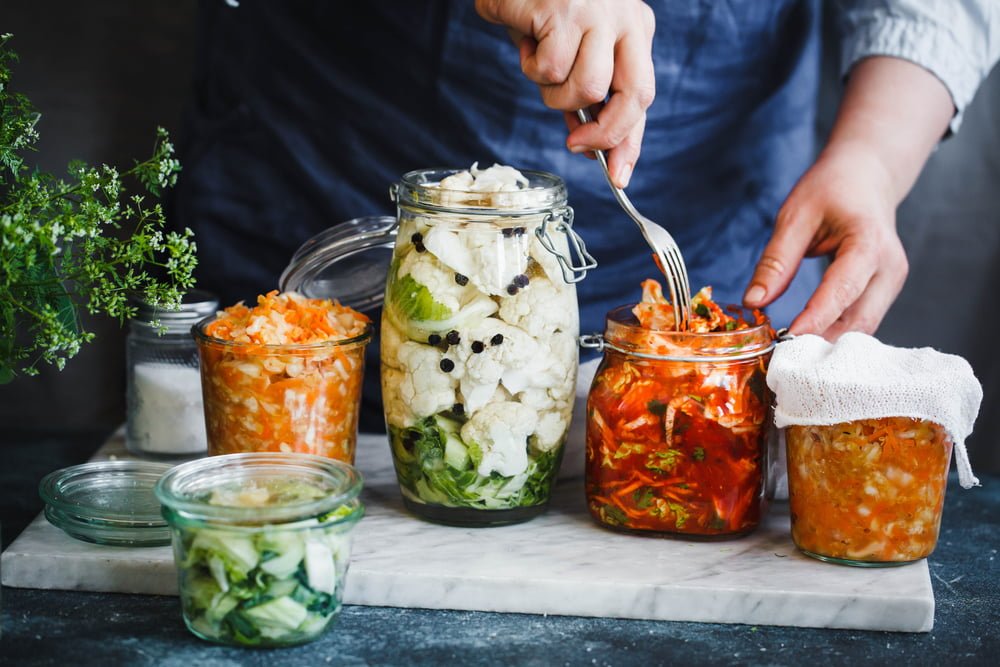
The ridiculously simple way to turn vegetables into gut-healing probiotics (no pills required).
I really appreciate you checking out my blog! Just so you know, some of the links in this post are affiliate links. This means that if you buy something through them, I might earn a little bit of money, at no extra cost to you. There’s absolutely no pressure to buy anything, but if you do, it genuinely helps support the time and love I put into writing these posts.
Let me say something that might surprise you:
Some of the most powerful probiotics in the world…
aren’t in fancy capsules.
They’re not in $60 powders.
And they don’t come with a 12-step morning routine.
They’re sitting quietly in your kitchen.
Waiting for water. Salt. And a little patience.
I remember the first time I heard about fermenting vegetables at home. My reaction was immediate:
“Wait… you’re telling me I just leave vegetables in salt water… and they become healthier?”
It sounded suspiciously simple.
Like one of those things that shouldn’t work… but does.
And once you understand what’s actually happening, it’s kind of incredible.
What Fermentation Really Does (In Simple Terms)
When you submerge vegetables in salt water, you’re creating the perfect environment for good bacteria (lactobacillus) to grow.
These bacteria:
- break down sugars in the vegetables
- create beneficial acids
- preserve the food naturally
- and turn it into a probiotic powerhouse
No chemicals. No weird ingredients.
Just time doing its thing.
And here’s the part most people miss: Fermented vegetables often contain more diverse and potent probiotics than store-bought supplements.
Because they’re alive.
Fresh.
Active.
Your gut doesn’t just want probiotics, it wants living ecosystems.
Why This Matters (More Than You Think)
Your gut is connected to:
- digestion
- energy levels
- mood
- immunity
- inflammation
- even cravings
So when your gut is off, everything feels… slightly off.
You might not even notice it right away.
You just feel a little more tired.
A little more bloated.
A little less “yourself.”
That’s why something as simple as fermented vegetables can feel like flipping a switch.
It’s not dramatic overnight.
It’s subtle.
Steady.
But powerful.
The Basic Formula (So Simple It Feels Like Cheating)
Here’s literally all you need:
- Vegetables (cabbage, carrots, cucumbers, radish, anything firm)
- Water
- Salt
That’s it.
No vinegar.
No starter cultures.
No complicated steps.
Just:
- Chop your vegetables
- Add them to a jar
- Mix water + salt (about 1–2 tbsp per quart)
- Pour over until fully submerged
- Let it sit at room temperature
Within a few days, fermentation begins.
Within a week, you’ve got probiotics.
A Real-Life Moment You’ll Probably Relate To
The first time I tried fermenting, I kept checking the jar like it was a science experiment I didn’t fully trust.
“Is it supposed to smell like that?”
“Are those bubbles normal?”
“Did I accidentally invent something dangerous?”
And then… I tasted it.
Tangy. Crisp. Alive.
It didn’t taste like something that sat on a shelf for months.
It tasted fresh, slightly wild, and oddly addictive.
That’s when it clicked, this isn’t just food.
This is living food.
Tools That Make It Way Easier (Without Overcomplicating It)
You can use a regular jar.
But a couple of small upgrades make the process smoother and more consistent.
👉 Amazon helper: Masontops Complete Mason Jar Fermentation Kit: This kit includes airlock lids and weights so your veggies stay submerged and ferment properly without mold or guesswork.
👉 Amazon helper: Ball Wide Mouth Mason Jars (32 oz, 12-pack): Simple, durable, and perfect for batch fermenting so you always have probiotics ready.
👉 Amazon helper: Redmond Real Sea Salt: Clean, mineral-rich salt without additives, important because regular table salt can interfere with fermentation.
That’s it. No need to turn your kitchen into a lab.
Let’s Talk About the Fear (Because Everyone Has It)
“Is this safe?”
“Can I mess this up?”
“What if I do it wrong?”
Totally fair questions.
Here’s the truth:
Fermentation has been done for thousands of years, long before refrigerators, preservatives, or nutrition labels.
And when done correctly (clean jar, proper salt ratio, veggies fully submerged), it’s incredibly safe.
Your nose is your guide:
- Fresh, tangy, slightly sour smell → good
- Rotten, foul smell → toss it
Trust your senses. They’re smarter than you think.
Why This Beats Store-Bought Probiotics
Let’s be real for a second.
Most probiotic supplements:
- have limited strains
- lose potency over time
- don’t survive stomach acid well
- and can be expensive
Fermented vegetables?
- naturally diverse bacteria
- alive and active
- paired with fiber (prebiotics)
- ridiculously affordable
It’s not even a fair comparison.
This is whole-food, gut-level support.
How to Actually Eat Them (Without Overthinking It)
You don’t need to eat a whole jar.
Start small:
- a forkful with lunch
- a side with dinner
- add to bowls, salads, wraps
- even alongside eggs
Your gut adapts over time.
Consistency beats quantity.
If This Made You Think… “Why Am I Not Doing This Already?”
That’s exactly why I write.
Because the most powerful health shifts aren’t complicated, they’re just not talked about enough.
In my weekly newsletter, I break down simple, real-life health tools like this, the kind that actually fit into your life and quietly change how you feel day to day.
No overwhelm.
No perfection.
Just clear, useful ideas you can start immediately.
👉 Join here and if you’ve been enjoying this kind of content, you’ll want to be on the list before I open up deeper, more detailed guides and member-only content.
Final Thought
Fermenting vegetables isn’t just about food.
It’s about slowing down.
Understanding what your body actually needs.
And realizing that sometimes the simplest things… are the most powerful.
Water.
Salt.
Time.
That’s it.
And somehow, that turns into better digestion, stronger immunity, and a gut that actually works with you instead of against you.
So now I’m curious, would you actually try fermenting at home, or does it still feel a little intimidating?
Disclosure: As an Amazon Associate, I may earn from qualifying purchases, but this does not affect my recommendations.I only suggest products I’ve personally vetted.
 Be Inspired..!!
Leave a comment