
And it always picks the worst possible moment
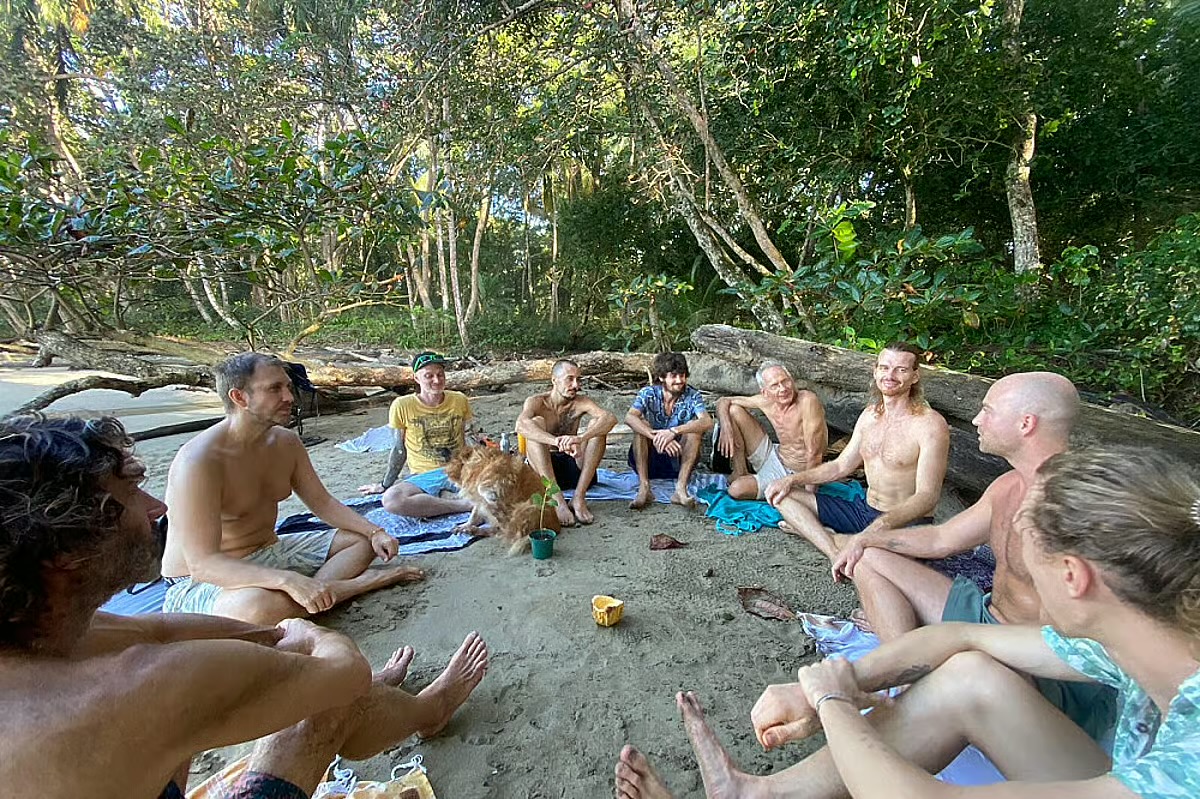
Day two of your trip. You’re finally relaxed. You’ve got a view, you’ve got a drink, the lighting is doing something genuinely beautiful and you almost feel like a person again.
And then your stomach sends you a memo.
Something is wrong. Something has been wrong since the airport. And now it’s day two and you haven’t used the bathroom in a way that felt human since Tuesday, and you are silently calculating whether this qualifies as a medical situation or just a deeply humbling travel experience.
Welcome to vacation constipation. Nobody talks about it. Everybody has had it. And it is somehow always worse when you’re sharing a hotel room.
Here’s what’s actually happening inside you, and why it’s not your fault.
Your gut has a nervous system of its own. Gastroenterologists call it the enteric nervous system, and it operates like a second brain running a parallel program inside your abdomen. It tracks your sleep. Your stress. Your meal timing. Your hydration. Your movement patterns.
And travel obliterates all of it in about six hours.
You wake up at 4 a.m. for a flight. You skip your normal breakfast. You drink airport coffee on an empty stomach. You sit completely still in a pressurized metal tube for three hours while the recycled air quietly dehydrates every organ in your body. You land, you rush, you eat something heavy and fast and weird, and then you stay up too late in an unfamiliar bed with the wrong pillow and a TV remote with too many buttons.
Your gut registers all of that as a low-grade emergency.
It’s not being dramatic. It genuinely doesn’t know what’s happening. It just knows that everything feels wrong, and so it either shuts down entirely or panics spectacularly, and neither option is what you needed during your annual vacation.
The dehydration thing is more serious than you think.
Most people know they should drink water on planes. Almost nobody actually does it properly, because drinking water on a plane means using the airplane bathroom, and airplane bathrooms are a spiritual test nobody signs up for voluntarily.
So we don’t drink water. We drink coffee. We drink wine. We have a Coke with our sad snack box. And by the time we land, we’re walking around several cups of fluid behind where our body needs to be, and our intestines are trying to function with the hydration levels of a beef jerky.
This is fixable. And it’s one of the fastest ways to change how your entire body feels while traveling.
Electrolytes, not sports drinks loaded with sugar, but actual electrolyte packets you dissolve in water, can make a measurable difference in bloating, sluggishness, headaches, and that specific exhaustion that makes you wonder why you spent money to feel this bad somewhere expensive.
One packet before a flight. One after landing. That’s it. That’s the whole intervention.
And then there’s vacation eating. Which is its own category of chaos.
You know what happens. You tell yourself you’ll eat light. You’ll make good choices. You’re not going to do what you did last year.
And then it’s 11 p.m. and someone says there’s a taco place around the corner that will change your life and honestly, at that point, what are you even doing if you say no?
So you eat the tacos. And the fries that came without being asked. And something fried for dessert. And then you have another drink because you’re on vacation and this is what living looks like.
None of that is wrong. That’s travel. That’s joy. That’s the whole point.
But your digestive system runs on fiber, and vacation food is aggressively fiber-deficient. Restaurant food, airport food, fast food, road trip food, basically everything that gets eaten when you’re away from home, is low in the one thing that keeps your gut moving the way it’s supposed to.
Most people wait until they’re already miserable to think about this. That’s the equivalent of remembering you needed an umbrella after you’re already soaked. Travel-friendly fiber packets, the kind that dissolve in water and don’t require a blender or a personality change, taken before and during a trip are one of the most unsexy but genuinely effective travel hacks that exist.
Your future self, on day three of the trip, will be grateful.
The stress piece is where it gets interesting.
Here’s something that took me an embarrassingly long time to understand: your body cannot tell the difference between exciting stress and bad stress.
It doesn’t know that your cortisol is spiking because your connecting flight has a 40-minute window and you’re at Gate D47. It just knows cortisol is high. And cortisol changes your digestion immediately, it either stalls everything or accelerates everything, depending on how your nervous system is wired.
This is why some people get constipated the second they leave home, and others spend the first day of every vacation finding every bathroom in a three-block radius. Neither group is broken. Both groups are just experiencing what happens when a stressed nervous system meets an unfamiliar environment.
The intervention isn’t a supplement. It’s pace.
Eating slower, not perfectly, not mindfully in a wellness retreat way, just slower than you’d eat at your desk or in a car, makes a real physiological difference. Your digestive system produces enzymes in anticipation of food arriving at a certain rhythm. When you inhale food in eight minutes, standing over a food truck, running to get somewhere, those enzymes don’t do their job well. When you actually sit down and take twenty minutes, even for something casual, your gut processes it differently.
It’s not glamorous advice. It’s just biochemistry.
Walking after dinner is one of the most slept-on digestion hacks in existence.
Not for fitness. Not for steps. Just for moving food through your system in a way that gravity and muscle movement help with naturally.
A 10-minute walk after a meal can reduce bloating, ease reflux, and clear that “concrete block in your stomach” feeling that makes you want to lie face-down on your hotel bed and reconsider your choices.
And here’s the part I actually love about this: some of the best travel moments I’ve ever had happened on those walks.
After the restaurants close and before the bars get loud, cities feel completely different. Slower. More themselves. You notice things you’d miss if you were just moving from point A to point B. Those random post-dinner wanders are sometimes the part you remember most, years later.
Your gut health and your best travel memories, working together. Who knew.
The part nobody says out loud.
Digestion affects your mood more than most people realize, and your mood affects your digestion more than most people want to admit.
When your stomach is off, everything gets harder. You’re more irritable. More tired. More anxious. More uncomfortable in your own skin. A genuinely beautiful place can feel like a chore when your body is operating in quiet distress.
And I think there’s a version of “travel wellness” that doesn’t require you to become a person who talks about gut microbiomes at dinner. It doesn’t require cleanses or elimination diets or giving up anything you love.
It just requires paying a little attention to a few things your body needs, so your body doesn’t spend the whole trip staging a protest.
Hydrate early. Bring fiber before you need it. Walk after you eat. Slow down a little.
That’s it. That’s the whole system.
And now I want to hear yours.
Because we have all been humbled by our own digestive system in the most inconvenient possible locations. We have all done the math on whether we can make it to the next rest stop. We have all stood in a foreign bathroom at 2 a.m. questioning every decision we made in the last 48 hours.
What’s your travel stomach story?
Drop it in the comments. No judgment. Only solidarity.
Because if there’s one thing I know for certain, it’s that the people who travel best aren’t the ones with the nicest luggage.
They’re the ones whose stomachs aren’t actively plotting against them.
If this felt uncomfortably relatable, subscribe. I write about the actual human stuff every week, the parts of wellness that aren’t photogenic but genuinely change how you feel.


Leave a Reply