
Turns Out “More Protein” Was Never the Flex I Thought It Was
A quick note from me: I really appreciate you checking out my blog! Just so you know, some of the links in this post are affiliate links. This means that if you buy something through them, I might earn a little bit of money, at no extra cost to you. There’s absolutely no pressure to buy anything, but if you do, it genuinely helps support the time and love I put into writing these posts.
I need to tell you something that’s going to make you a little mad, because it made me mad. We’ve been sold a lie about protein, and most of us bought it without asking a single question. More protein, more muscle, more youth, more everything. That was the deal. Except nobody mentioned the part where cramming your body full of amino acids all day might be quietly speeding up the exact thing you’re trying to avoid. Aging. The very thing you bought the protein powder to fight.
Here’s the moment this clicked for me. I was in a waiting room and overheard a woman arguing with her dermatologist about her forehead. Not in a vain way. In a furious way. She’d done everything right. The Pilates. The water bottle everyone has now. The retinol. And her skin still did what it wanted. She looked at the doctor like he’d personally betrayed her, and honestly? Same. Because somewhere in that conversation, the doctor mentioned that overloading on protein activates something called mTOR, a pathway that basically tells your cells to grow and divide faster. Faster division sounds great until you realize that’s also cellular aging on fast forward. Nobody puts that on the protein bar label.
So let’s just sit with that for a second. You’ve been doing the thing you thought was optimizing you, and it might have been doing the opposite. That’s not a fun realization. I felt stupid for about a week. Then I got curious, which is a much better use of energy than feeling stupid.
Here’s what actually happens. Your body has a built-in cleanup system called autophagy, which is basically your cells taking out the trash, clearing out damaged proteins and junk that accumulates over time. The problem is autophagy doesn’t kick in efficiently when you’re constantly flooding your system with amino acids, because your body reads that as “we’re in growth mode, no time to clean.” Growth mode all day, every day, forever, is not actually the win we’ve been told it is. It’s more like leaving every light in your house on and wondering why the electric bill is insane.
I’m not telling you to fear protein. I’m telling you the amount most of us default to, somewhere around 150 grams a day because some influencer said so, might be working against you instead of for you. Dialing that back to something more like 80 to 100 grams, especially from sources that aren’t just chicken breast on repeat, gives your body actual breathing room. And that breathing room is where the good stuff happens.
Now here’s where I have to be honest with you, because the internet will tell you this shift is easy and it is not. The first two weeks felt like I was doing something wrong. Old habits do that. They make the healthy thing feel like the risky thing. What actually got me through it wasn’t willpower, because willpower is a myth we tell ourselves before we inevitably fail. It was making the shift require less thinking, not more discipline.
A fifteen dollar kitchen scale did more for me than any app ever has. Something basic, like an Etekcity digital scale, the kind that’s sitting in a million American kitchens already. When you can actually see what a hundred grams of lentils looks like versus what you assumed it looked like, you stop guessing and start knowing. Guessing is where all of us were overshooting protein without even realizing it.
The second thing was glass meal prep containers, the boring Pyrex or Rubbermaid kind everyone’s mom already owns. This sounds too simple to matter, but it matters completely. When your lower protein meals are already prepped and sitting there, you’re not standing in front of your fridge at eight at night defaulting to a protein shake because it’s easy. You default to what’s already ready. Make the better choice the easy choice and you don’t need motivation anymore.
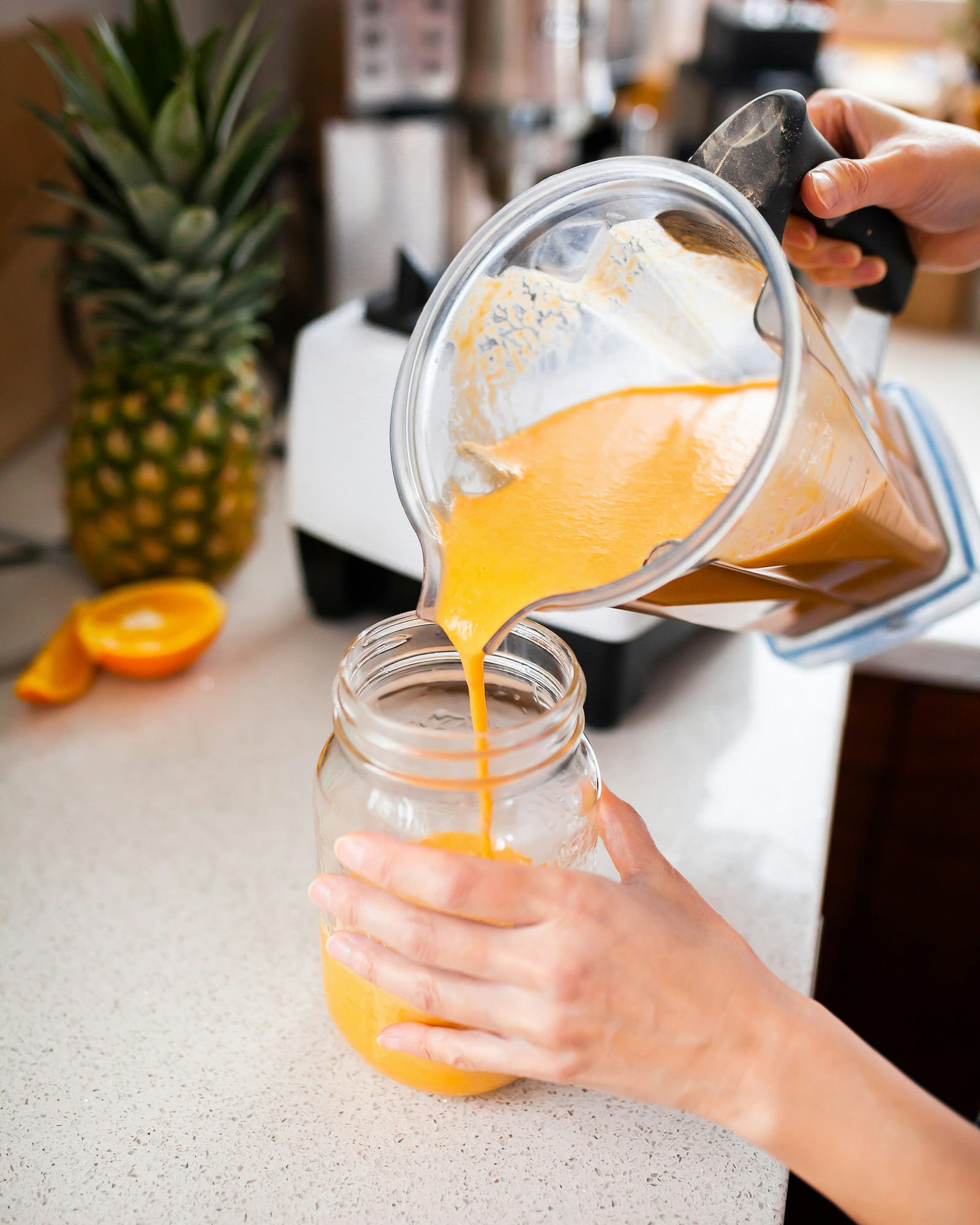
And a basic blender, nothing fancy, the kind of Ninja or NutriBullet that’s already on a million registries and countertops, made it possible to actually get vegetables and plant proteins into my day without turning every meal into a production. Smoothies with hemp seeds, chia, and greens started replacing the second protein shake I used to have out of habit rather than hunger.
None of these things are exciting. That’s actually the point. The wellness industry wants you to believe transformation requires a $400 gadget and a subscription you’ll forget about in March. It doesn’t. It requires removing the friction between you and the better choice, and then getting out of your own way.
What I noticed after about a month wasn’t dramatic. Nobody stopped me on the street. But my energy at three in the afternoon stopped cratering. My skin looked like skin instead of something working overtime. My anxiety, which I didn’t even realize was tangled up in all this food noise, quieted down. I didn’t lose muscle. I lost the exhausting belief that more was always better.
That belief is everywhere, and it’s costing us more than we realize. We’ve built an entire culture around addition. More supplements, more workouts, more hustle, more grams. Nobody’s selling subtraction because subtraction doesn’t come with a price tag. But your body has been asking for subtraction this whole time, and we’ve been too busy optimizing to listen.
I think that’s the actual story here. Not protein. Listening.
If any of this landed, if you’ve ever felt like you were doing everything “right” and still not getting the result you were promised, that’s exactly what I write about every week. I break down the stuff wellness culture sells us that doesn’t actually hold up, and what real, sustainable change looks like instead of the performative version. Free subscribers get the diagnosis. Paid subscribers get the mechanism, the protocol, and the actual conversation about why we fall for this stuff in the first place.
Come sit with me for a while. Subscribe, and let’s figure this out together.
Subscribe on Medium and Substack
Disclosure: As an Amazon Associate, I may earn from qualifying purchases, but this does not affect my recommendations. I only suggest products I’ve personally vetted.


Leave a comment